
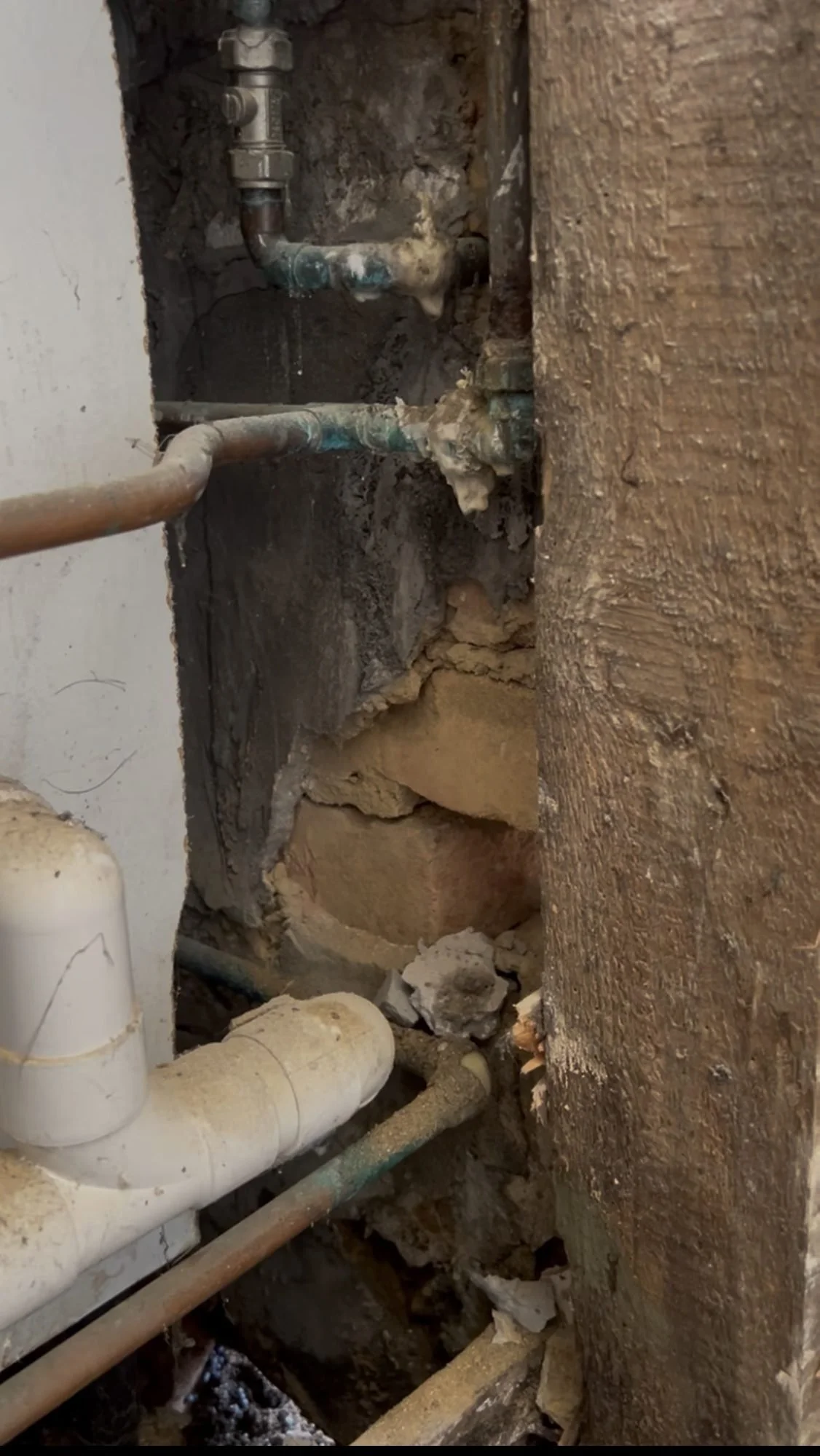
Timber, rot and woodworm surveys
Woodworm, wet rot and dry rot can affect floors, roofs and timber frames. What matters is how far it has gone, whether the timber can still do its job and what it will cost to put right. I’m a builder first, with a background in traditional carpentry and timber framing.
Rot and woodworm: what’s the difference
Wet rot needs timber that stays wet for a long time. It stays where the damp is, and it softens and weakens the wood.
Dry rot is a fungus that can start in timber at around 20% moisture content. It can grow across brick and stone to reach other timber, so it can show up some way from the original damp. Many outbreaks stop once the water source is fixed and the timber dries out.
Woodworm is the larvae of wood-boring beetles tunnelling through timber. Small exit holes and fine dust are the usual signs, but old holes don’t always mean it is still active, and the beetles are most active between spring and late summer.
How I check the timber
Tapping the timber, and looking for the obvious signs.
Pushing probes into the timber to see how far the decay has gone and whether it is still structurally suitable or needs replacing.
Drilling a very small auger into the heart of the wood and feeling the resistance and what comes out, to tell whether the timber is sound.
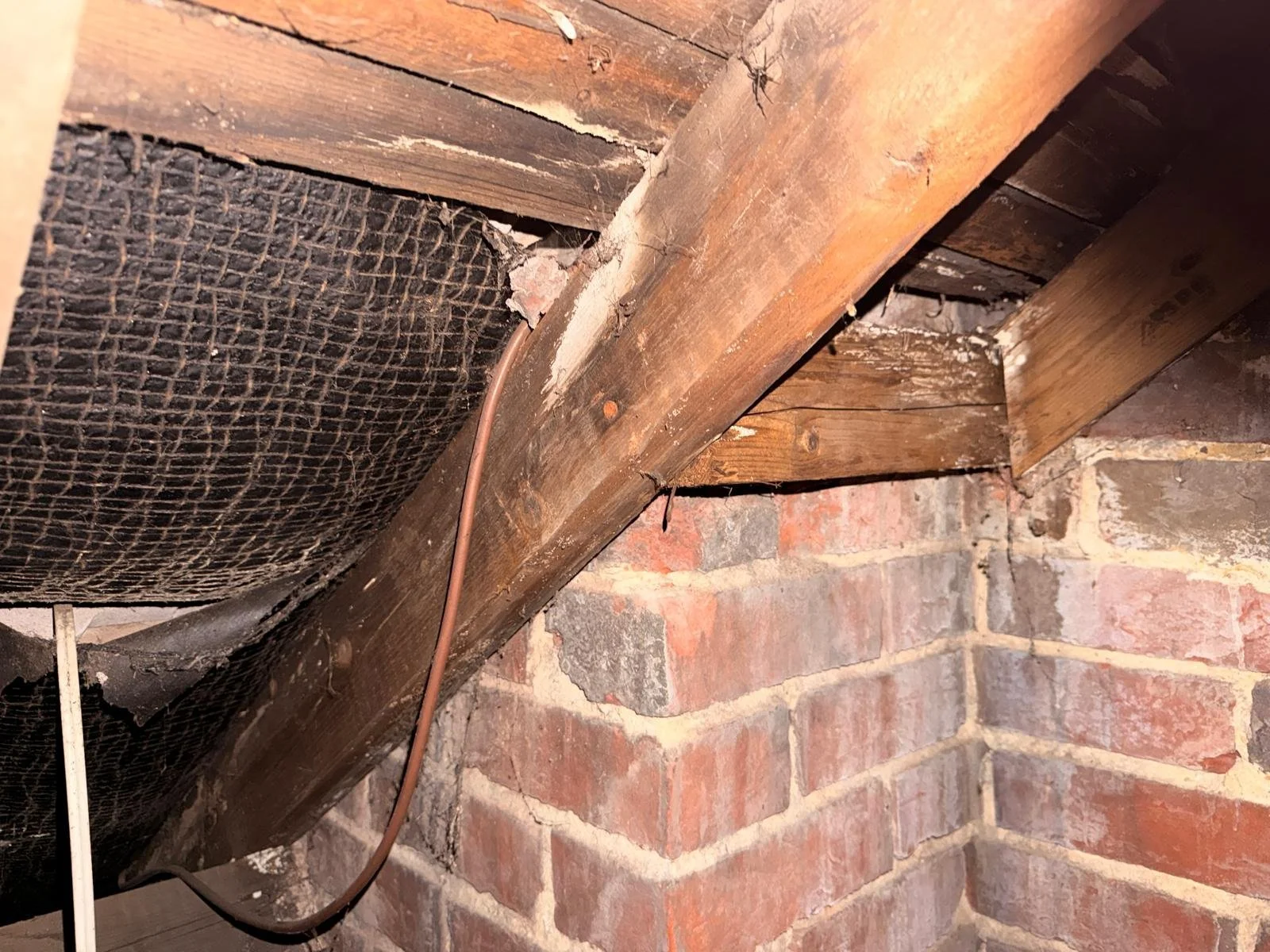
What you get
My assessment of the condition of the timber, advice on how to repair or replace it, based on having done this work. You can add estimated costs and a schedule of works to a targeted inspection or partial survey, and a full building survey includes them. I sell no treatments.
Fix the damp first
Timber decay is nearly always a moisture problem. Rot and woodworm need damp timber to get started, so the first job is to find where the water is coming from: a leaking gutter, pipe or roof, rising or penetrating damp, or condensation in a poorly ventilated space such as a roof void or under a floor. Treating the timber without fixing that is treating the symptom. Once the source is fixed and the timber dries out, the decay usually stops, and what is left is deciding what to repair and what to replace.
Where it turns up
Common places are roof spaces, suspended floors, the ends of joists built into walls, lintels, and timber hidden behind finishes. These are spots where damp air gets trapped and nobody looks.
What I don’t do
I’m not a structural engineer. If a beam has rotted and a new one needs sizing, I’ll tell you to bring one in. Most of the time the answer is like-for-like replacement, but involving the right people protects everyone.
Talk it through with me
Tell me what you’re seeing and where, and I’ll tell you plainly which survey fits. Call 07421 996581, email Harry@alderbuildingconsultants.co.uk or use the contact page. Not happy with your report? Tell me and I’ll refund you in full. You only pay once your report and invoice have reached you.