
Independent advice on damp: what UK guidance says
If you have damp in an older property, you will probably get advice from several people, and it won’t always agree. I’m not the only one who says the cause should be found before any treatment is chosen. UK heritage bodies, councils and consumer advice all say much the same. This page summarises what they say, in my own words, with links so you can read the originals yourself.
Find the cause first
Brighton & Hove City Council’s heritage guidance says the first step is to find the cause of the damp and remove it where possible. Cotswold District Council gives the most common causes in older buildings as poor maintenance and unsuitable building materials. Typical examples it lists are blocked or damaged gutters and downpipes, leaking pipework, damaged roof slates, blocked ventilation bricks, a high water table, and ground levels built up against the building.
Rising damp is rarer than people think
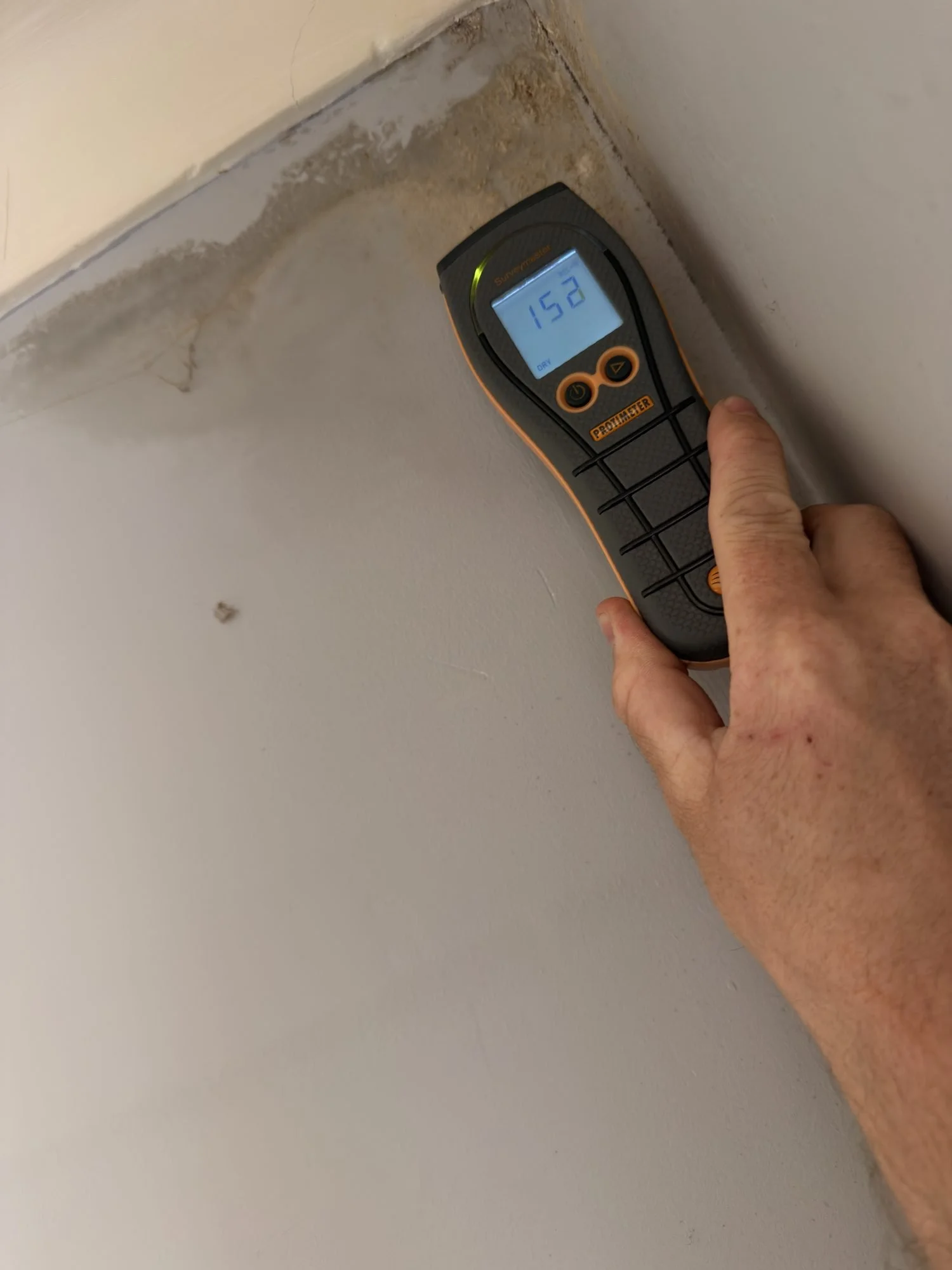
The Society for the Protection of Ancient Buildings (SPAB) says true rising damp is rarer than commonly assumed but is often misdiagnosed. It points out that a high reading on an electrical moisture meter is not enough on its own, because salts in a wall can give high readings in a wall that is essentially dry, and so can rain splashing up the wall. It says real rising damp usually shows a horizontal salt tide-mark and high nitrate levels, and that measuring moisture within the thickness of the wall helps rule out surface causes.
Treatments the guidance warns about in older buildings
Cotswold District Council advises against injected damp-proof courses, cement plaster or render, and waterproofing such as tanking or waterproof paint in historic and traditional buildings. It says these rarely fix the problem and can make it worse. Brighton & Hove City Council says chemical treatments and standard tanking often don’t work well in historic buildings, particularly flint and similar construction. It says they can stop the walls drying out as they were designed to, can simply move the damp elsewhere, and can’t be reversed. SPAB says there should be a presumption against retrospective damp-proof courses in buildings built before about 1919. If your building is listed, damp work may also need Listed Building Consent.
Get a second opinion from someone who isn’t selling the work
Which? advises being careful with “free” damp surveys from companies that promise to fix the problem. It suggests getting at least three traders to quote, and, if their recommendations don’t agree or you suspect unnecessary work, getting an independent damp specialist, who has no stake in selling treatment. It puts the cost of an independent report at roughly £100 to £750. SPAB says owners should challenge doubtful recommendations and get a written second opinion from someone independent of the firm selling the work. Brighton & Hove City Council advises relying on an independent qualified surveyor instead of a quote from a damp proofing company.
Where I come in
I sell no treatments and earn nothing from the work I recommend. I look for the cause, explain what I found and why, and tell you what, if anything, needs doing. I’m a builder first, so I can also tell you roughly what the work involves and what it is likely to cost.
Sources
Brighton & Hove City Council, Damp treatment (heritage): https://www.brighton-hove.gov.uk/planning/heritage/damp-treatment
Cotswold District Council, damp in historic and traditional buildings: https://cotswold.gov.uk/planning-and-building/historic-buildings-and-conservation-areas/retrofit-and-energy-efficiency/maintenance/damp/
SPAB, What is rising damp?: https://spab.org.uk/node/506
Which?, Rising damp treatments: https://www.which.co.uk/reviews/damp/article/dealing-with-damp/rising-damp-treatments
The council guidance is written for historic and traditional buildings. This page is a summary in my own words, not a substitute for the originals, and none of these organisations has endorsed me or this page.
Talk it through with me
Tell me what you’re seeing and where, and I’ll tell you plainly which survey fits. Call 07421 996581, email Harry@alderbuildingconsultants.co.uk or use the contact page. Not happy with your report? Tell me and I’ll refund you in full. You only pay once your report and invoice have reached you. I hold professional indemnity and public liability insurance, and a certificate is available on request.
Already had a survey that flagged damp or cracks? Get an independent second opinion.