
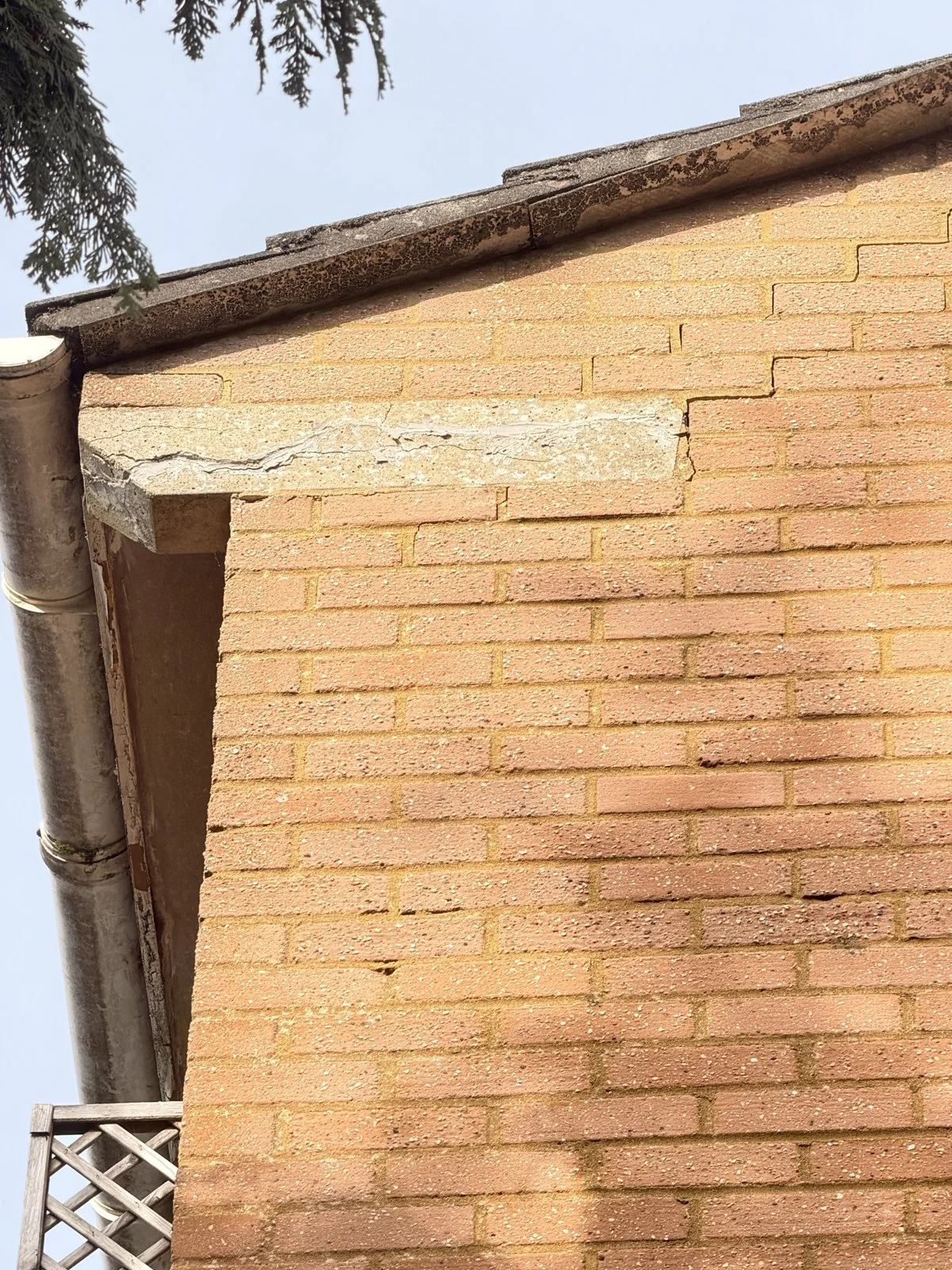
Cracks and building defects
Most of the defects I’m asked to look at are cracks. Different types of crack mean different things, for example whether they run vertically or horizontally. Most cracks are not the disaster people fear, but a few are. My job is to tell you which is which, and what it will take to put right.
Surveys start from £250. Call 07421 996581 to talk it through before you book.
What a crack can tell you
Hairline cracks in plaster are very common and are usually cosmetic, because plaster moves differently from the wall behind it.
Stepped cracks that follow the mortar joints can point to movement in the structure.
A crack that is wider at the top or the bottom shows which way the wall is moving.
Horizontal cracks can mean part of a wall is failing, so they are worth looking at sooner rather than later.
Width, length and whether it is getting bigger all matter, not just where it is.
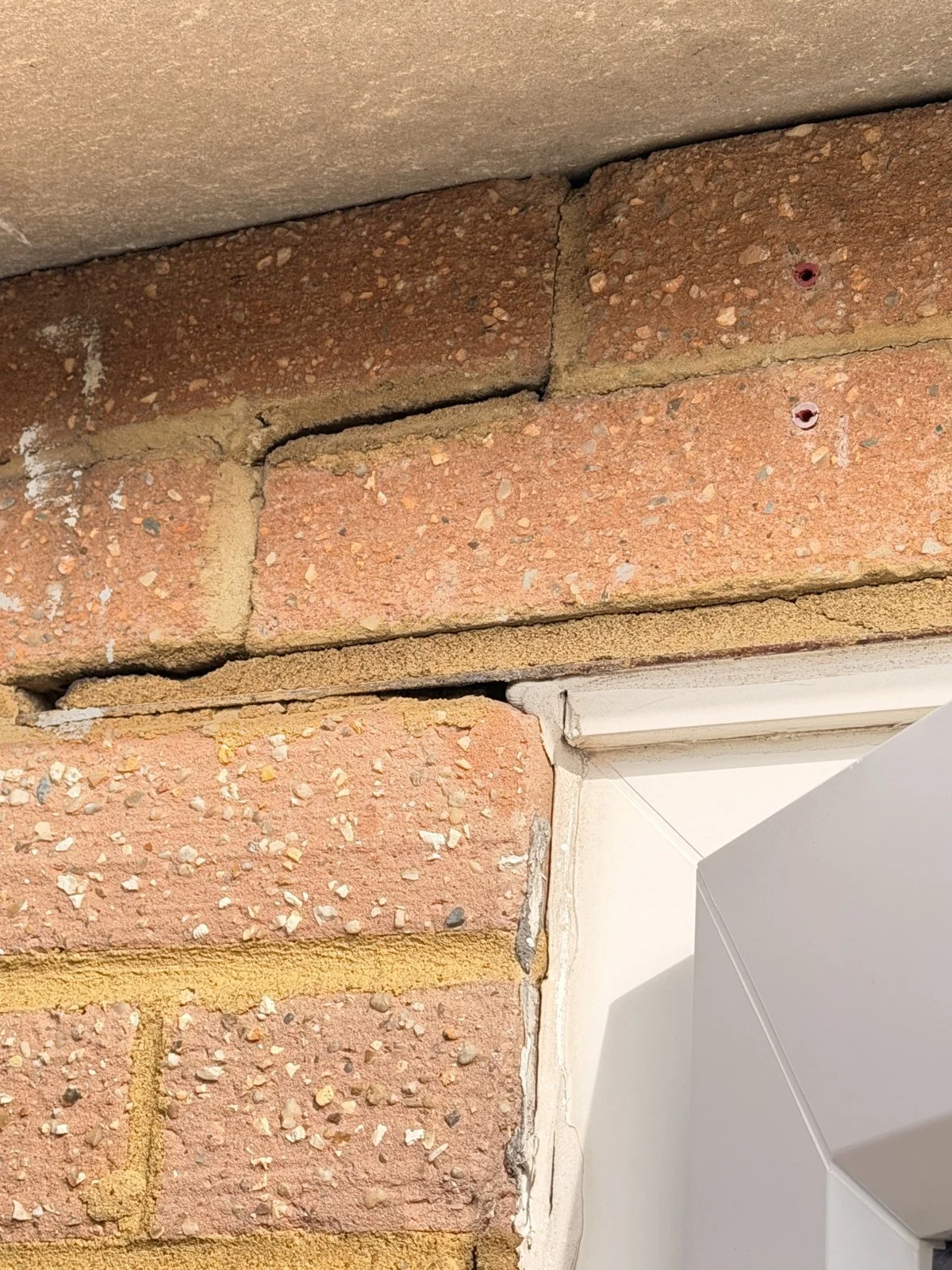
Cracks up to about 5mm are usually cosmetic and only need filling and redecorating. Wider cracks can start to affect doors, windows and weathertightness, and very wide ones can mean the structure itself is at risk.
What causes cracks
Subsidence, rusting, or general movement of the property. Hard, brittle materials that don’t allow much movement or flexibility are more prone to cracking than materials that suit the age of the building. Other common causes are clay soil shrinking in dry weather and swelling when it’s wet, tree roots, lintels that have rusted, leaking drains washing out the ground, and earlier repairs done in the wrong materials. On older brick walls, a hard cement-based mortar or render can’t move, or let moisture out, the way the original lime mortar did, so the wall can crack around it or the brick face can be damaged.
Is it still moving?
A crack that was repaired years ago and hasn’t changed is a different problem from one that keeps opening up, so whether it is getting wider matters as much as how wide it is. If you can, take dated photos with a ruler beside the crack every few weeks, and hold off filling it until the cause is known, because a filled crack hides what it has been doing.
What the report gives you
A risk analysis. It sets out what needs doing, what could happen if you do nothing, what would happen if you do something, and what would happen if you do it all. You can add estimated costs and a schedule of works to a targeted inspection or partial survey, and a full building survey includes them. I’m a builder, so I know roughly what these repairs cost. Where a crack needs a structural engineer, I’ll say so and tell you why.
Talk it through with me
Tell me what you’re seeing and where, and I’ll tell you plainly which survey fits. Call 07421 996581, email Harry@alderbuildingconsultants.co.uk or use the contact page. Not happy with your report? Tell me and I’ll refund you in full. You only pay once your report and invoice have reached you. I hold professional indemnity and public liability insurance, and a certificate is available on request.
Already had a survey that found cracks or defects? Get an independent second opinion.